Coffee and Cycling: More Ritual Than Fuel
Lifestyle
Christophe · 26 August 2026 · 4 min read · 3 views
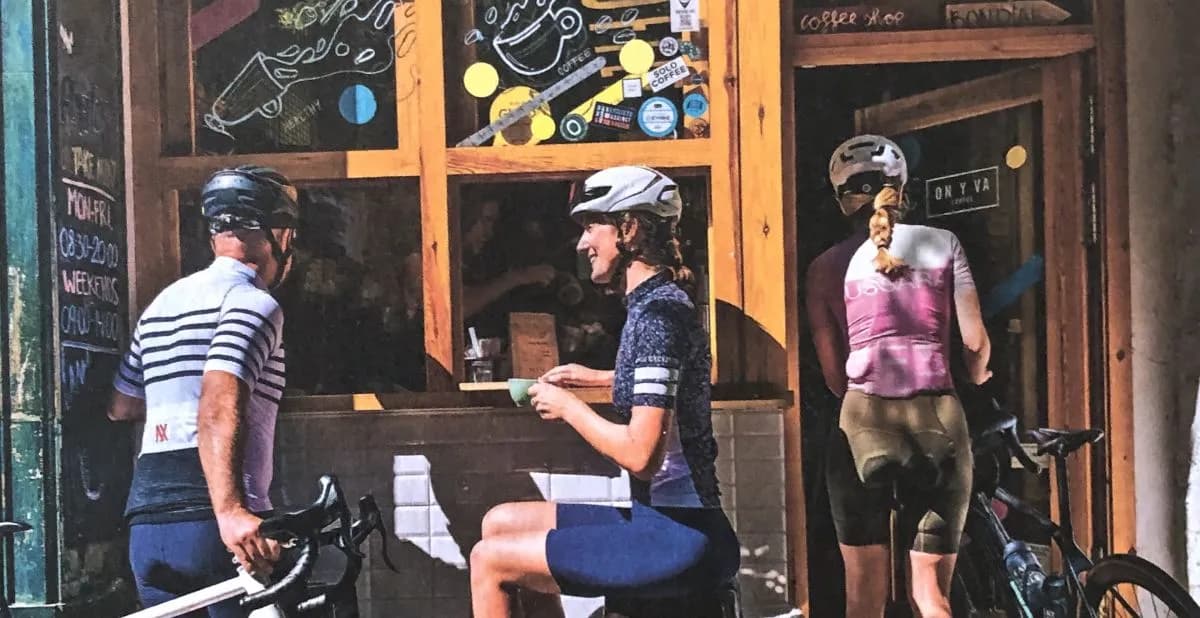
From the bidon topped up at a countryside cafe to the venues we map today, coffee has never been just fuel for cyclists. It is a rhythm, an excuse, a landmark.
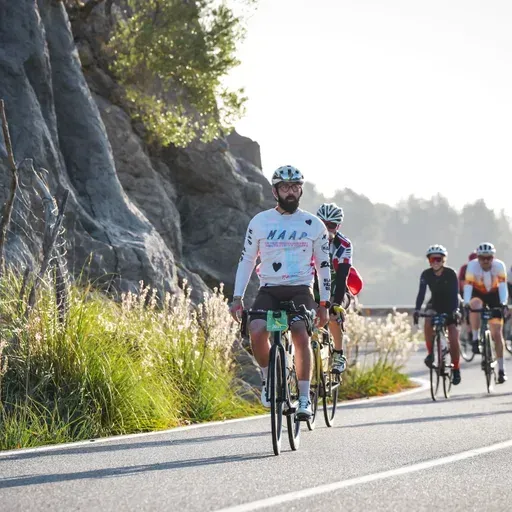
There is a scene that repeats itself, almost identically, on roads across Europe for more than a century now: a group of cyclists leans their bikes against a wall, sits down on a terrace, and orders. The language changes, the country changes, the ritual does not. You might think this is a recent habit, popularized by Strava groups and "coffee ride" Instagram accounts. In reality, coffee and cycling have been keeping company for much longer than that.
An old couple
As early as the late 19th century, the first French cycling clubs organized their Sunday rides around a fixed point: the village cafe, where the group would talk things over after the effort. Le Velocipedic-Sport, a Bordeaux cycling magazine published between 1885 and 1897, was already documenting rides where reaching the cafe mattered almost as much as the ride itself. Coffee was not a break from the outing, it was part of it, the moment when the group tightened back up.
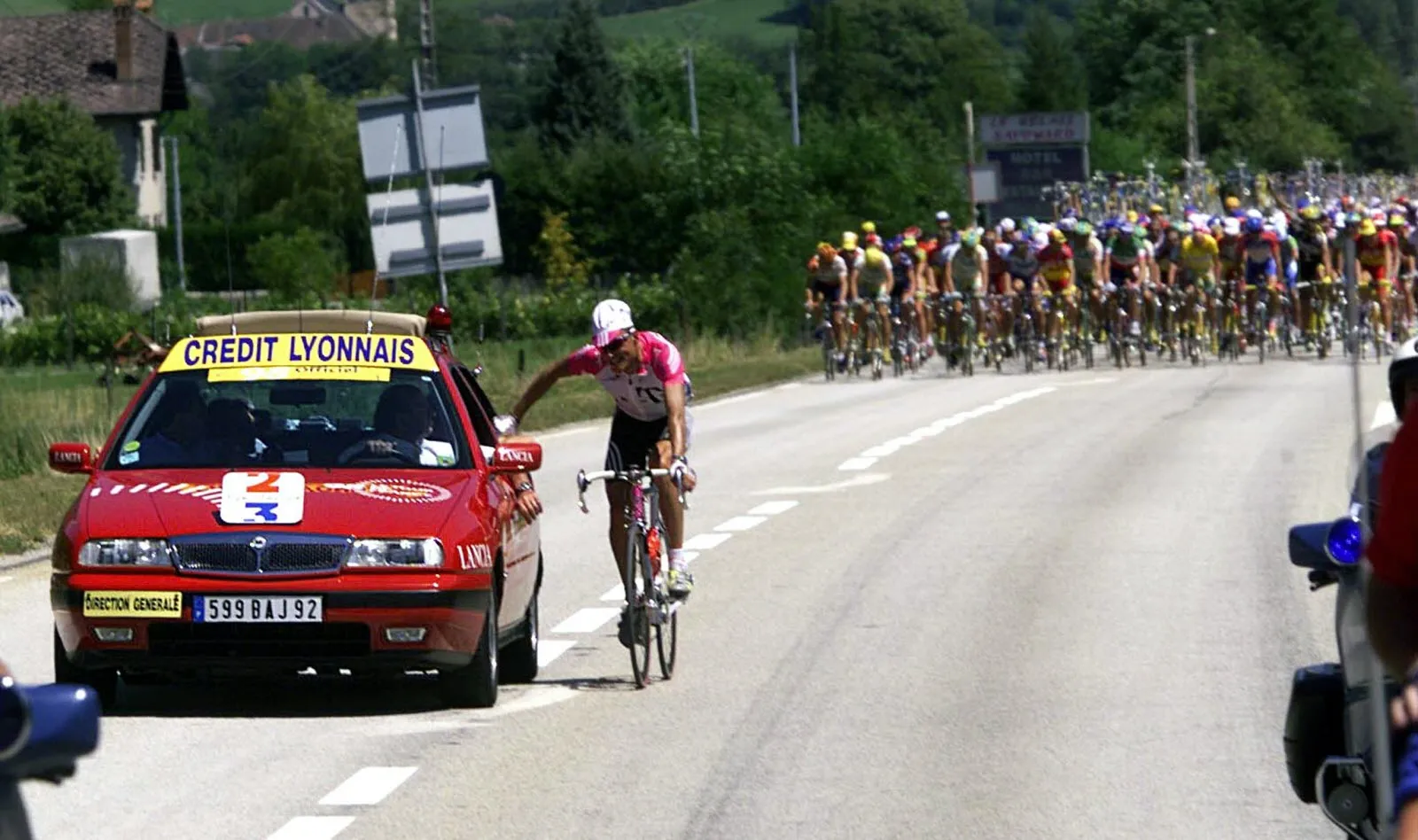
In the professional peloton, the habit long took a more concrete form: an improvised stop at a countryside cafe mid-stage, to refill bottles or knock back an espresso before an attack. Those stops have almost disappeared from modern racing, timed down to the second, but they remain part of the folklore commentators still bring up with a bit of nostalgia.
An excuse, a rhythm, a landmark
What makes the relationship between coffee and cycling so particular is that it goes well beyond the question of fuel. Coffee is a signal to slow down, in a sport otherwise obsessed with performance: watts, heart rate, average speed. The "coffee stop" in the middle of a club ride has nothing to do with sports nutrition. It is a social meeting point, an excuse to stretch a ride a little longer, a moment when a group that spread out along the road comes back together at the same table.
There is also, more prosaically, a real physiological benefit: caffeine remains one of the few legal, well-documented performance aids in cycling, capable of delaying the sensation of fatigue and improving alertness over long distances. It is no secret in the peloton, where a tight espresso before the start is practically part of the warm-up ritual, right alongside the rollers.
Coffee as a place, not just a drink
What has changed over the past fifteen years is how this bond has taken physical shape: cafes built from the ground up for cyclists have popped up everywhere, from Sydney to Eindhoven and every bike-friendly city in between. Places that hang vintage bikes above the tables, park an air compressor next to the espresso machine, or paper a wall with local routes. Coffee is no longer just a stop along the road there, it has become an anchor point, sometimes the whole reason for the detour.
That is exactly what Ravito is trying to map: not just "where to get a coffee," but where to find that specific kind of place, run by people who understand what a group of cyclists soaked in sweat or rain actually wants when they push the door open. A welcome with no hesitation, somewhere to lean a bike without apologizing for it, and a coffee that still holds up after three hours in the saddle.
What will not change
Times keep getting sharper, bikes keep getting lighter, data keeps creeping into every ride. But the coffee stop survives all of it, precisely because it was never really about performance in the first place. It is the one moment on a ride when nobody is looking at their computer.
Ravito note: it is also why we map cafes, hotels and bike bars on the platform, judged by the same standard as a good teammate: welcoming, reliable, and never too far when you need one.
Weekly guide
This is the kind of place we write about every week.
More from the Journal
GravelLifestyle
5 June 2026 · Christophe
Why gravel is having its moment ... and why it's not going away
Read →8 min read

31 August 2026 · Pau
KOM Hunters: A Field Report on a Cult That Doesn't Know It's One
They set off alone, early in the morning, for a 400-meter segment at the back of an industrial estate. They come home limping, but happy
Read →1 min read