Buying a new bike is exciting. Riders often focus on the frame, wheels, groupset, or weight, but one of the most important investments is usually overlooked: the bike fitting.
You just spent three months researching the right bike. You compared framesets, agonised over groupsets, read every review of every wheelset in your budget. You made the right choice. And then you rode it for six hours and your left knee started talking to you in a language you didn't want to learn.
This is not a bike problem. This is a fit problem. And it's the most common expensive mistake in cycling.
The thing nobody tells you at the bike shop
A bike fit is not a luxury add-on for professional cyclists. It is the foundation of everything else — comfort, efficiency, injury prevention, the simple pleasure of riding for a long time without thinking about your body.
The frame doesn't care about your hip mobility. The saddle doesn't know your leg length. The handlebars have no opinion about your lower back history. The bike is a machine built to general specifications. You are not a general person. The gap between those two facts is what a proper fit closes.
What poor positioning actually costs you
Cycling is repetitive movement at scale. A four-hour ride at 80rpm means roughly 19,000 pedal strokes. If your alignment is off by a few millimetres — knee tracking slightly inward, saddle a centimetre too low, cleat rotated a few degrees wrong — that small error compounds 19,000 times in a single session.
The body adapts. Until it doesn't.
Common injuries directly linked to poor positioning:
- Patellar knee pain — often caused by saddle height or cleat alignment
- Achilles tendon irritation — typically saddle too low or cleats too far forward
- Lower back strain — handlebar reach too long, or insufficient core engagement from poor hip angle
- Hip tightness — saddle setback misaligned with your femur length
- Hand numbness — weight distribution forward, bar height or reach incorrect
- Neck and shoulder tension — usually a combination of reach and stack issues
A professional fitter identifies these risks before they become injuries. That is worth considerably more than a better groupset.
The efficiency argument — for those unmoved by injury risk
Even if you feel comfortable on your current setup, you are almost certainly losing power.
When your position is optimised, the mechanics change:
Power transfer from hip to pedal becomes direct rather than oblique. Your natural cadence — the rhythm your body actually prefers — aligns with the gear you're in. On climbs, your breathing position opens up rather than compressing. Late in a long ride, when form starts to deteriorate, a correct position degrades more slowly than one you've been fighting all day.
The numbers matter. Many riders spend €500 upgrading their cassette or €800 on a new wheelset while sitting in a position that's costing them 8–12% of their sustainable power output. A bike fitting costs between €100 and €300 depending on the studio and depth of analysis. The arithmetic is not complicated.
Two riders, same height, completely different bikes
Height is almost irrelevant as a fitting variable beyond a rough initial frame size. What actually determines your position:
Femur length relative to total leg length — two people at 180cm can have a 4cm difference here, which changes saddle height, setback, and crank length meaningfully.
Torso and arm length — determines reach to the bars, stem length, and whether you need a compact or endurance geometry.
Hip mobility and flexibility — affects how much drop you can sustain between saddle and bars without rounding the lower back.
Shoulder width — handlebar width should match shoulder width, not come in a standard 42cm because that's what the bike was specced with.
Previous injuries — a knee that was reconstructed five years ago has different tracking needs than the other knee. A fitter accounts for this. A size chart does not.
This is why buying a bike based on a manufacturer's geometry chart — even a good one — and riding it straight out of the shop is a partial solution at best.
Before you buy, not after
The best time to get a bike fitting is before or during the purchase process, not six months after you've been riding uncomfortably.
A fitting before purchase can determine:
- Correct frame size (sometimes different from what geometry charts suggest)
- Stem length and rise
- Crank length — often overlooked, directly affects knee health and power output
- Saddle shape and width — not a personal preference, a measurement
- Handlebar width — matched to your shoulder width, not the spec sheet
This is particularly critical for road, endurance, and gravel bikes where small geometry differences between models have significant real-world consequences over long distances.
What a professional fitting actually involves
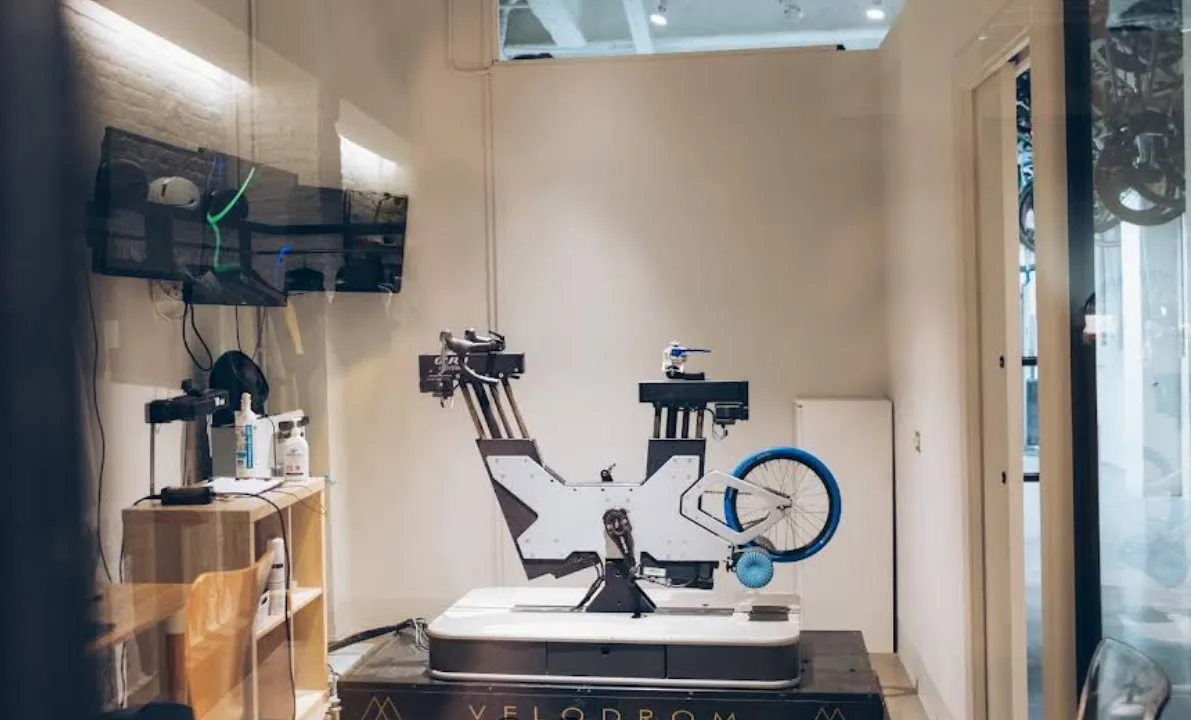
A thorough bike fitting takes between 90 minutes and three hours. It includes a physical assessment — flexibility, mobility, injury history, riding goals — followed by on-bike measurement and adjustment, usually on a trainer, sometimes with motion capture or pressure mapping.
The fitter adjusts saddle height and fore-aft position, cleat alignment and float, handlebar height and reach, and in some cases recommends component changes (longer or shorter stem, different saddle, crank length).
You leave with a setup document. Your next bike starts from those numbers. The fitting follows you, not the bike.
The real calculus
A bike fitting is not an optional extra. It is part of the cost of the bike — the part that makes the rest of it work properly.
The right position transforms the riding experience: more hours in the saddle, more confidence on long descents, better power when it matters, and the quiet satisfaction of a body that recovers well because it wasn't fighting the machine all day.
Whether you ride 30 kilometres on Sunday mornings or train for alpine passes, a properly fitted bike lets you ride the way the sport is supposed to feel.
The bike is ready. The question is whether it's ready for you.
Looking for a bike fitter near you? Check the Ravito map — we list certified fitting studios across Europe alongside the best cycling cafés and bike shops.