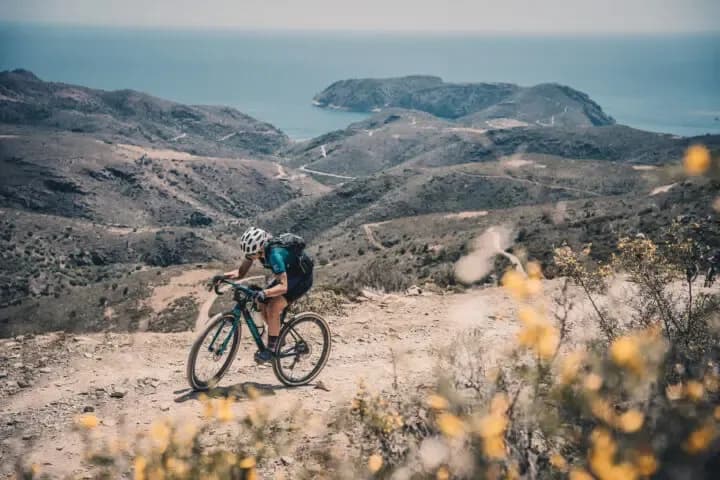
The Girona Gravel 100 — Empordà and the Gavarres
A hundred kilometres east and south of Girona through the Empordà plains and the Gavarres hills. Fast farm tracks, cork oak forest, medieval villages, and a finish back in the city along the Ter river.
97 km
Distance
1,435 m
Elevation
4h20
Duration
2 ravitos
Ravitos
Girona ends and the gravel begins almost simultaneously. A short paved climb out of the old city — the kind of ramp that clears the last apartment buildings and delivers you onto open hillside before you've had time to think about it — and then the road dissolves into loose earth and the descent begins toward the Ter.
The river is the first thing the landscape offers. Wide, slow, fringed by willows and reeds, cutting east through agricultural land before it reaches the sea. You follow it briefly before the route swings northeast and the Empordà opens up.
This is farming country, and it looks like it. Wide gravel tracks between wheat fields and olive groves. Stone farmhouses set back from the road with no affectation — no renovation signs, no agritourism panels, just walls and shutters and the smell of turned earth. The occasional village announces itself from a distance by a Romanesque bell tower, which is usually the tallest thing in the landscape because nothing has been built taller since. The comparison to Tuscany is made by everyone who rides here and it is not wrong: the same rolling agricultural light, the same economy of ornament.
The Empordà section is fast. The tracks are hard-packed, the gradient almost absent, and the temptation to ride it like a criterium is real. The second half of the route will clarify whether that was a good idea.
South of Cassà de la Selva, the terrain changes register. The Gavarres are a compact mountain range between the Empordà plain and the coast — nothing dramatic in terms of altitude, but specific in character: cork oak and pine on slopes of loose limestone, old stone paths that have been used long enough to know where they're going, viewpoints that appear without warning above the forest canopy. The climbs are short and punchy rather than long and grinding. The descents are technical enough to require attention — loose surface, tight corners, the kind of exit that doesn't forgive a late line.
From the top of the Gavarres, on a clear day, you can see the whole territory at once: the Empordà plain rolling east to the Mediterranean, the Montgri massif rising above the coastal wetlands, and to the north the first ridges of the Pyrenees, grey and unhurried on the horizon.
The return to Girona follows the Ter valley back into the city, the medieval walls of the old town appearing ahead as the greenway flattens out. The loop closes at the river, which is where it began.
A hundred kilometres of gravel that covers three distinct landscapes in a single day: river corridor, agricultural plain, forested hills. None of them extraordinary in isolation. Together, and in this order, they make a very good ride.
Route
100 km · +1,350 m · Gravel
| Segment | Notes |
|---|---|
| Girona → Ter river | Short paved climb, gravel descent to the river |
| Ter valley → Empordà plains | Wide farm tracks, fast and flat, heading northeast |
| Empordà plains (km ~20–60) | Rolling agricultural terrain, olive groves, medieval villages |
| Cassà de la Selva area | Water and food stop — last reliable stop before the Gavarres |
| Les Gavarres (km ~60–90) | Cork oak forest, punchy climbs, technical descents |
| Gavarres → Girona via Ter | Descent and return on the Ter river greenway |
Route follows the same itinerary used by the Traka 100, Girona's annual gravel event held each May.
97 km
Distance
1,435 m
Elevation
—
Average gradient
405 m
Summit altitude
The Girona Gravel 200 — Three Landscapes, One Long Day
201 km · 2912 m
https://ravito.club/places/the-traka-200
Before you go
- Tyre choice79% unpaved with three different surfaces. Hard-packed farm tracks in the Empordà reward a narrower contact patch; the Gavarres limestone demands grip. A 38–42mm tyre covers the range without compromise.
- Pace the Empordàthe fast flat section in the first half is where legs are fresh and the temptation to push is highest. The Gavarres climbs come later, on accumulated fatigue, and they notice.
- Cassà de la Selvais the last reliable water and food stop before the Gavarres section. Treat it as a checkpoint regardless of how you feel at km 50.
- Spring and autumnare the natural seasons for this route — the Empordà in summer is exposed and hot, and the farm tracks dry to loose dust. May and October give the best surface and the best light.
- Girona is the baseEverything a cyclist needs is within walking distance of the start: coffee, mechanics, a place to eat after. Arrive the evening before, ride it the next morning.