RAVITO.
15 saved
LoopRoadSwitzerland

Tour du Lac Léman — Around Lake Geneva in a Day

175 kilometres around the largest natural lake in the Alps — clockwise from Geneva, through Lausanne and Montreux, across into France at Evian, and back through Thonon and Yvoire. One loop, two countries, three languages, one long day.

171 km

Distance

196 m

Elevation

9h10

Duration

1 ravito

Ravitos

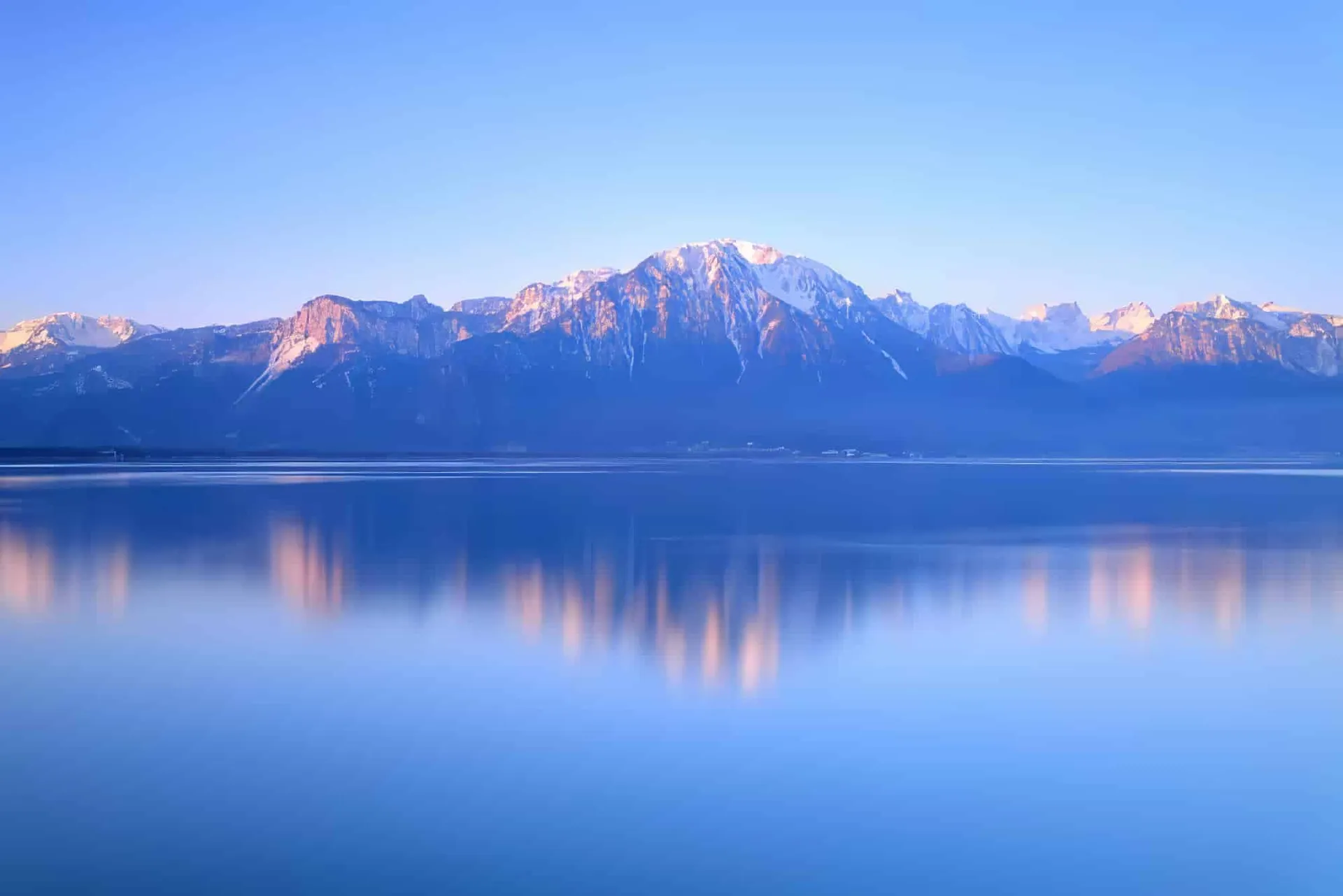
Lac Léman is not a small lake. It is 73 kilometres long and 14 kilometres wide at its broadest point, the largest natural lake in the Alps and the second largest freshwater lake in Western Europe. The Route N°46 that circles it is signed in both directions, in both countries, and takes a full day to ride. There is no shortcut. The loop is the route.

The departure from Geneva is the most practical starting point — accessible by train, with good bike services, and positioned at the western tip of the lake where both the Swiss and French shores begin. The standard direction is clockwise, which means the Swiss shore first and France on the return, keeping the lake consistently on the right for the first hundred kilometres.

The Swiss side begins with Nyon — a small lakeside town with a Roman history, a medieval castle on the hill, and the kind of waterfront promenade that Swiss municipalities maintain with a diligence that does not invite comment. The road here follows the shore closely, sometimes on dedicated cycle lanes, sometimes sharing with traffic in the towns. Between Nyon and Lausanne, the route passes through vineyards known as La Côte — not as famous as Lavaux but worth knowing: fruity Chasselas pressed from grapes grown on terraced slopes between the road and the lake.

Lausanne is the largest city on the route and the one that rewards a longer stop. The Olympic capital of the world — the IOC has been based here since 1915 — with a steep medieval centre above the port of Ouchy, where the cycle route passes. Above Lausanne, the Lavaux vineyards begin in earnest: 800 hectares of terraced vines inscribed on the UNESCO World Heritage List since 2007, a landscape that took eight centuries of human labour to construct on south-facing limestone slopes above the lake. The terraces benefit from what locals call three suns — the direct sun, the light reflected off the lake, and the heat stored in the stone walls overnight. The Chasselas, Dézaley, and Saint-Saphorin produced here are the natural stop to understand. The road through Lavaux climbs slightly above the water and then drops back — a deviation from the flat logic of the rest of the loop, and the most spectacular stretch on the Swiss side.

Vevey is where Charlie Chaplin spent the last 25 years of his life. The oversized fork sculpture in the lake — 8 metres of stainless steel installed by the Alimentarium museum — is visible from the cycle path. Montreux follows immediately: the Jazz Festival town, the Freddie Mercury statue on the waterfront, the Belle Époque hotels that line the promenade and have been lining it since the mid-19th century when the Riviera climate and the railway made this the winter destination of choice for northern Europeans who could afford to leave.

Then, just south of Montreux, the Château de Chillon. It sits on a limestone outcrop barely separated from the shore — a medieval fortress in continuous use for a thousand years, controlling the passage between the northern and southern Alpine routes. Lord Byron visited in 1816 and wrote "The Prisoner of Chillon" in two days about François Bonivard, the monk who was chained in its dungeons for four years in the 16th century. The castle has 25 buildings, three courtyards, and 14th-century frescoes. It is the most visited historical monument in Switzerland. On a bike, it appears suddenly around a bend in the road, directly on the route, with no detour required. Stop.

After Villeneuve and the Rhône delta, the southern shore of the lake begins — flatter, wilder, the Alps visible to the south as the road crosses into France at Saint-Gingolph, the village split down the middle between the canton of Valais and the Haute-Savoie. No passports required, though ID is mandatory in both countries.

The French side is the quieter side. The cycle infrastructure is less polished than Switzerland's — more bolt-on than purpose-built in places — but the roads are emptier, the villages less frequented, and the sections that divert away from the main road offer some of the most peaceful riding of the day. The shore is occasionally obscured by private property and dense vegetation, which is the honest trade-off for choosing the quieter country.

Évian-les-Bains is the lunch stop. The spa town that gave the world its most famous bottled water is also a genuinely beautiful place to eat — a lakeside esplanade lined with Belle Époque architecture, a casino built in 1912, and a waterfront that justifies the reputation. The thermal baths are not incompatible with a cycling itinerary, depending on the pace you are keeping. The cheese tart on a terrace above the lake is, by all accounts, the correct order.

Thonon-les-Bains follows — another spa town, slightly less glamorous than Évian, with a belvedere above the lake and the kind of market town quality that Évian's resort identity tends to overshadow. Then Yvoire, a medieval village built entirely in the 14th century and barely changed since, its stone walls and flower-covered facades often cited as among the most beautiful in France. Cycling through it in the late afternoon, with the lake at the end of the street, is one of the set pieces of the loop.

The return to Geneva follows the northern French shore, crossing back into Switzerland near Hermance, and then the final kilometres into the city along the lakeside. The Jet d'Eau appears ahead — 140 metres of water projected 200 metres into the air, Geneva's most legible landmark — and the loop closes at the point it began.

175 kilometres. The lake looks different from the French side than it does from the Swiss side, which is either obvious or worth stating depending on how you tend to think about loops. In either case: the Tour du Lac Léman is not a hard day. It is a long one. The distinction matters.

Route

175 km · +800 m · Road · Route N°46

SegmentNotes
Geneva → NyonLake on the right, flat, dedicated cycle lanes on most of this section
Nyon → LausanneLa Côte vineyards, occasional traffic through towns
Lausanne (km ~40)Olympic Museum at Ouchy — natural break
Lausanne → VeveyLavaux UNESCO vineyards — the most scenic section on the Swiss side
Vevey → MontreuxCharlie Chaplin, waterfront promenade, Belle Époque hotels
Château de Chillon (km ~95)On the route, no detour needed — stop
Villeneuve → Saint-GingolphRhône delta, transition to the French shore
France: Saint-Gingolph (km ~105)Border crossing — ID required, no passport check in practice
Saint-Gingolph → Évian-les-Bains (km ~120)Quieter roads, occasional sections away from the lake
Évian-les-BainsLunch stop — lakeside esplanade, cheese tart
Évian → Thonon-les-BainsSpa towns, belvedere views
Thonon → Yvoire (km ~150)Medieval village, 14th century, mandatory slow pass
Yvoire → GenevaReturn across the French shore, back into Switzerland near Hermance

171 km

Distance

196 m

Elevation

1%

Average gradient

430 m

Summit altitude

Before you go

  • Signage is reliable on the Swiss side; less so on the French side.The red-and-white Route N°46 signs on the Swiss shore are frequent and easy to read. On the French side, the green-and-white Tour du Léman signs become less consistent, particularly through small villages. Follow the GPS rather than the signs from Saint-Gingolph onward.
  • Évian-les-Bains at km ~120 is the planned lunch stop.The French shore between Saint-Gingolph and Évian is about 15 kilometres — manageable without stopping, but plan the nutrition bridge from the last Swiss stop accordingly. - **The Château de Chillon is on the route.** Not a detour, not a deviation — the road passes directly alongside it. Budget 30–45 minutes if you want to go inside (CHF 15 entry). Even a brief stop at the lakeside is worth it. This is one of the most photographed castles in Europe, and the angle from the road at lake level is the one that explains why.
  • The Lavaux section climbs slightlyThe overall route has only 800 metres of climbing in 175 kilometres, but it is not entirely flat. The Lavaux vineyards between Lausanne and Vevey involve a few hundred metres of ascent and descent. Not significant in isolation; worth knowing in context.
  • CurrencySwitzerland uses the Swiss Franc; France uses the Euro. Most Swiss establishments accept Euros at their own conversion rate. Carry both if possible, or a card that works in both countries. - **Two days is an option.** The natural overnight stop is around Montreux or Villeneuve at roughly the 100km mark — good accommodation range, positioned at the transition between the Swiss and French shores. Three days is also possible and lets you spend meaningful time in Lausanne, Montreux, and Évian rather than riding through them.
  • ID required in both countriesPassports work; national identity cards work. The border crossings are manned but rarely stop cyclists.

This is the kind of place we write about every week.

Get the Ravito guide in your inbox.

No noise. Unsubscribe anytime.

Newsletter details