RAVITO.
7 saved
GravelSpain

Gravel stops near Barcelona

Montserrat trails and coastal gravel — essential checkpoints for Barcelona's off-road scene.

128 km

Distance

1,651 m

Elevation

Duration

2 ravitos

Ravitos

Catalonia · Gravel · 45–95 km

Barcelona is a road cycling city that doesn't know it yet. The gravel riders know. They've been leaving the city before sunrise for years — climbing through the Collserola hills, following the Llobregat river valley west, arriving at the foot of Montserrat before the tourist buses start running.

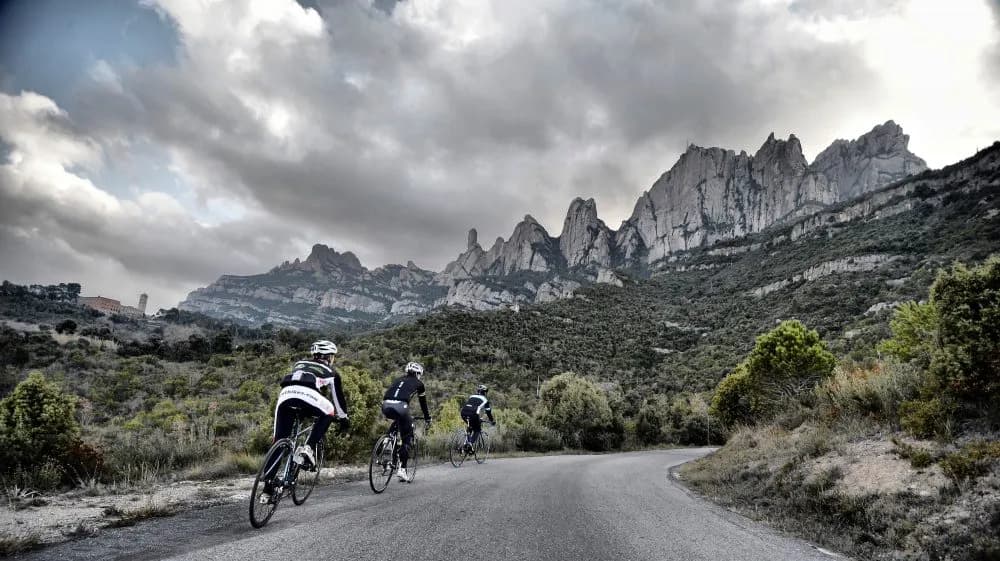
The mountain you can see from Barceloneta beach on a clear day — the jagged silhouette on the western horizon — is the same mountain that sits above some of the best gravel terrain in Catalonia. It takes about two hours to get there from the city centre on a bike. It takes considerably longer to explore it properly.

Barcelona to Montserrat

65 km · 900m · Mixed terrain · Classic

The exit from Barcelona is the least interesting part of the ride. The Llobregat industrial corridor is functional, flat, and not particularly beautiful. It is also well-signposted, bike-friendly, and the fastest way to get to the good terrain. Push through it.

Once past Martorell, the valley opens up and the road surface changes. Tarmac gives way to packed gravel, traffic disappears, and the outline of Montserrat starts to make sense from the ground — those improbable pinnacles of conglomerate rock, shaped by erosion into forms that look designed rather than geological.

The approach from the south via the Bruc valley is the classic gravel route. Most of the climbing happens in the last 20 kilometres. The terrain is mixed: agricultural tracks, forest paths, and a stretch of old Roman road above the monastery that makes you feel like you've ridden back in time.

The approach from the south, via the Bruc valley, is where the ride becomes the ride. Everything before it is transport.

What Montserrat actually is

A monastery built into the rock face at 720 metres. A pilgrimage site since the 9th century. The home of the Black Madonna. On weekdays before sunrise, before the cable car starts running and the pilgrims arrive, it's almost silent — just the rock, the wind, and the view over Catalonia that stretches from the Pyrenees to the sea on a clear day.

Eat at the monastery bar if it's open. Not because the coffee is exceptional — but because eating at a 9th-century monastery after a 65-kilometre gravel ride is the kind of thing you don't forget.

The coastal alternative

45 km · 600m · Rocky paths · Shorter

For those who prefer salt air to mountain silence, the gravel tracks through the Garraf Natural Park offer a different kind of difficult — rolling coastal terrain, rocky paths above the sea, views over the Mediterranean that justify the extra gear on the descents.

The loop from Castelldefels to Sitges and back via the park interior is 45 kilometres and feels longer. It's the kind of ride that earns a long lunch.

Where to start and finish

La Fuga is the natural assembly point — espresso, pastry, and the kind of atmosphere that exists only in places where cyclists have been meeting for years.

Velodrom is where you go if something needs fixing, or if you want to spend time around people who understand the difference between a good gravel tyre and a bad one.

Both are on the Ravito map. Both are worth the detour even if you're not riding.

Practical notes

  • Leave before 8am on weekdays if you want Montserrat to yourself
  • Bring enough water for the Montserrat approach — there's nothing between Martorell and the monastery
  • Tyres: 38mm minimum for both routes, 42mm preferred for Garraf
  • The monastery bar opens around 9am — plan accordingly

All stops mentioned are certified on the Ravito map — with opening hours, what to order, and bike parking.

128 km

Distance

1,651 m

Elevation

Average gradient

Summit altitude

This is the kind of place we write about every week.

Get the Ravito guide in your inbox.

No noise. Unsubscribe anytime.

Newsletter details