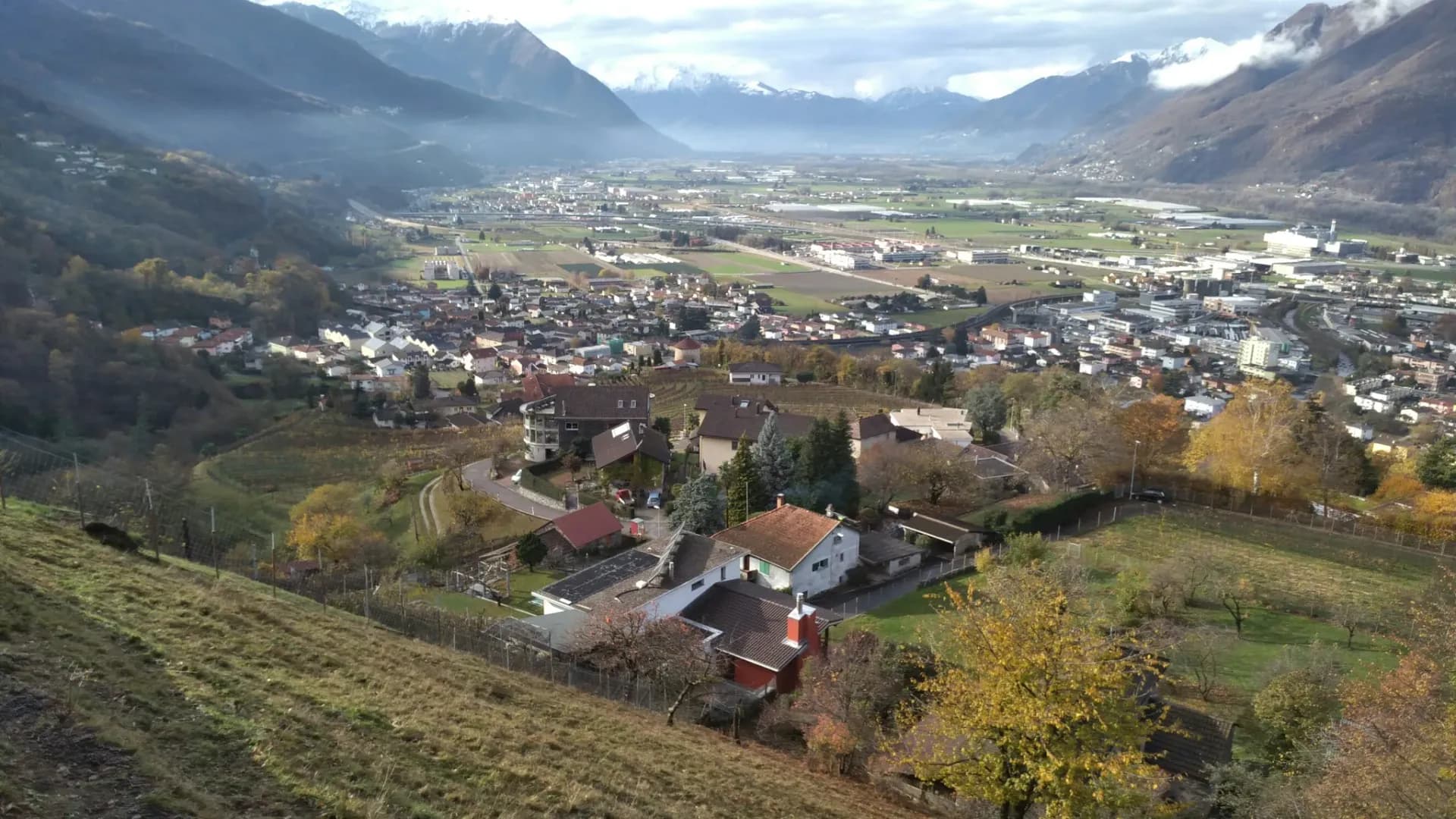
Giubiasco borders Bellinzona, the Ticino capital crowned by three medieval castles — Castelgrande, Montebello, and Sasso Corbaro — collectively a UNESCO World Heritage Site since 2000, and a fixture of the Tour de Suisse for decades thanks to its strategic position at the foot of the Alpine passes.
From Giubiasco, the historic Giubiasco–Carena popular race route climbs into the Morobbia valley, passing old iron workings still visible from the 19th century, before the road continues toward the San Jorio pass on the Italian border.
Bellinzona made its Giro d'Italia debut only in 2026, despite its long history as a Tour de Suisse staging town — the same year the Tour de Suisse itself routed a stage over the Monte Ceneri, a 5.1-kilometre climb averaging 6.5%, directly from nearby Gordola.
For riders based in Giubiasco, the options run in every direction: flat riverside spinning along the Ticino toward Lake Maggiore, the Morobbia's quiet mining-era roads, or, for the ambitious, the old Tremola road's 37 switchbacks up to the Gotthard Pass.
