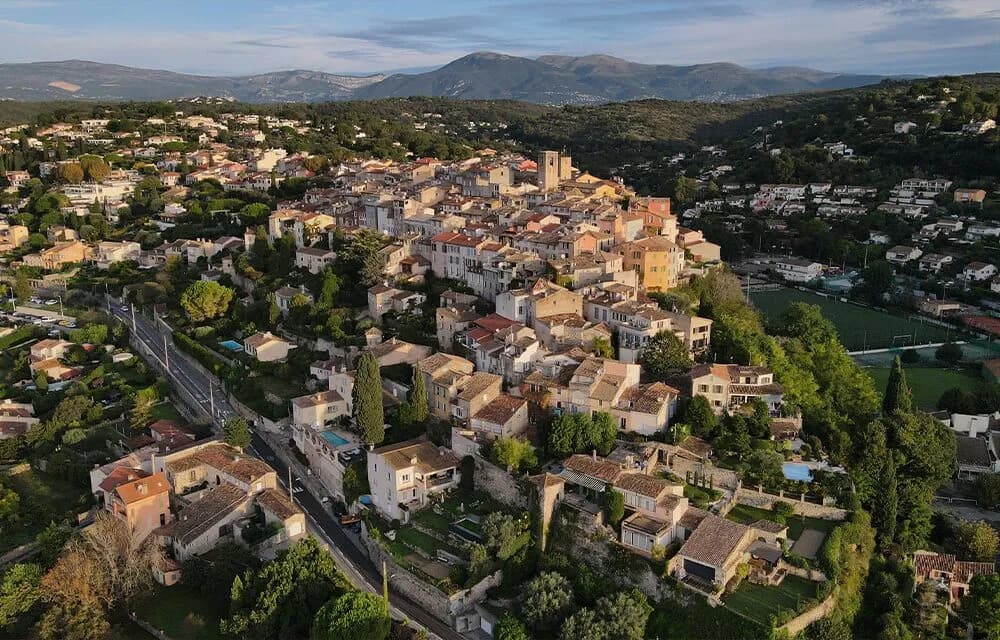
Biot is a medieval hilltop village between Antibes and Cagnes-sur-Mer, its cobbled lanes built on ground first settled by the Romans, now known for glassblowing and ceramics rather than any cycling pedigree of its own.
That changed, in a small way, with the Tour des Alpes-Maritimes: the professional stage race has used Biot as a finish town, its riders arriving after a loop through the tech park of Sophia Antipolis and a serious day of climbing.
The 2026 route packed four categorised climbs into 154 kilometres — the Col d'Èze, Col du Saint-Bernard, Col de Châteauneuf, and the Col de Gourdon at 760 metres, the race's high point — before dropping down through Valbonne to a short, sharp finishing climb in the centre of Biot.
Outside race day, the village works as a quiet inland base: flatter loops through Sophia Antipolis and along the Brague river for easy spinning, or a direct line into the hinterland climbs above Vence and Tourrettes-sur-Loup for something harder.

