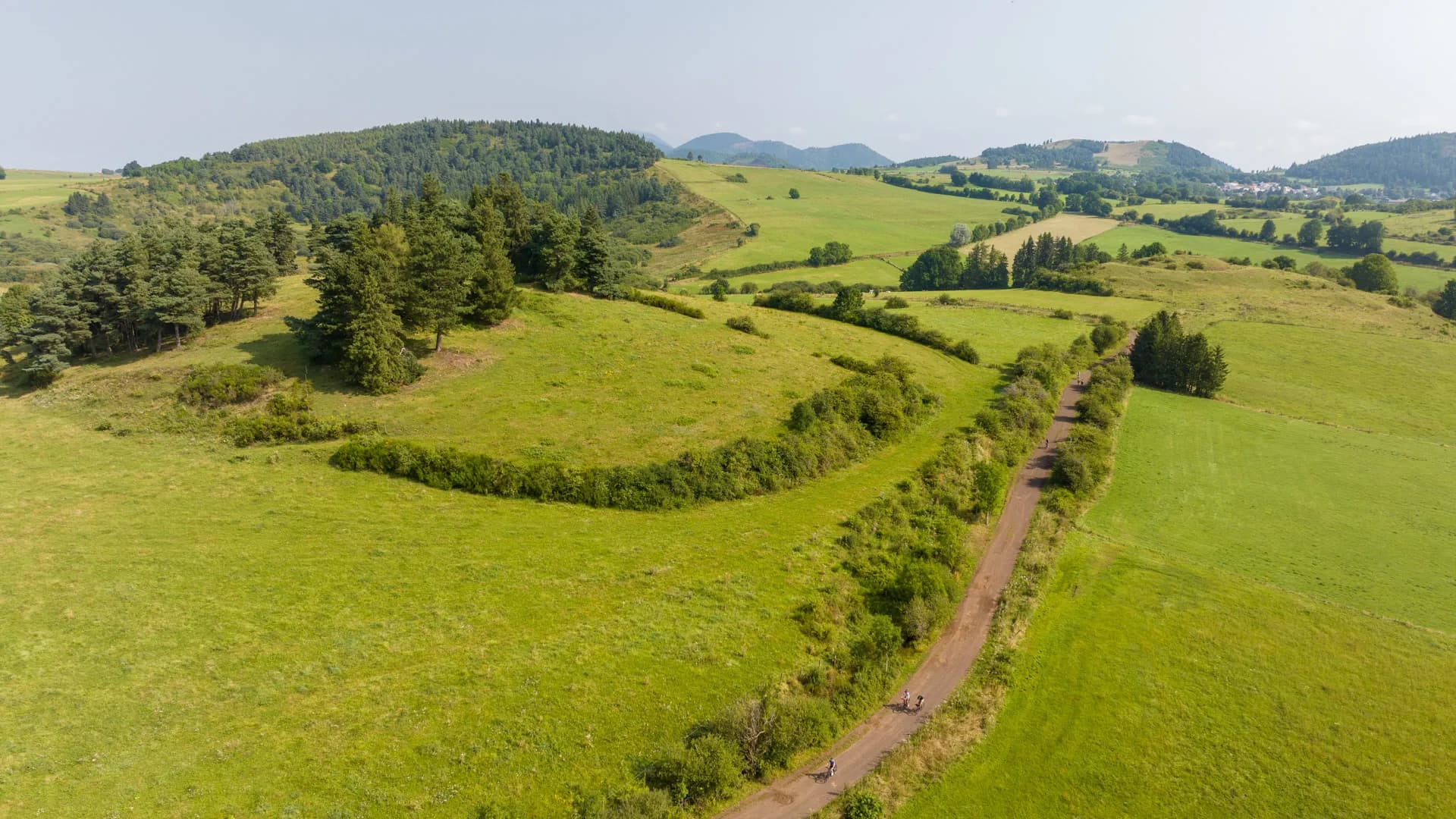
Clermont-Ferrand is built in the shadow of the Puy de Dôme, a dormant volcano rising 1,465 metres over the Auvergne, and few climbs in cycling carry as much folklore in so short a distance — just 13.3 kilometres, but the final stretch grinds past 11%.
On 12 July 1964, Jacques Anquetil and Raymond Poulidor climbed it wheel to wheel, elbows almost touching, neither man giving an inch, in what's still considered the sport's defining rivalry — Poulidor took the stage by 42 seconds, but Anquetil held the yellow jersey by 14, on his way to a fifth and final Tour win.
The Tour de France used the Puy de Dôme regularly through the 1980s, with winners including Fausto Coppi, Federico Bahamontes, and Joop Zoetemelk (twice), before a summit railway narrowed the road too far for modern racing. It returned only once more, in 2023, when Michael Woods soloed to victory — his first Tour stage win, at age 36 — while Tadej Pogačar clawed back eight seconds from race leader Jonas Vingegaard in the final kilometre.
The road is closed to cyclists most of the year, though local cyclotouring events occasionally open it — a rare piece of cycling pilgrimage that most riders can only look up at from Clermont-Ferrand's streets.