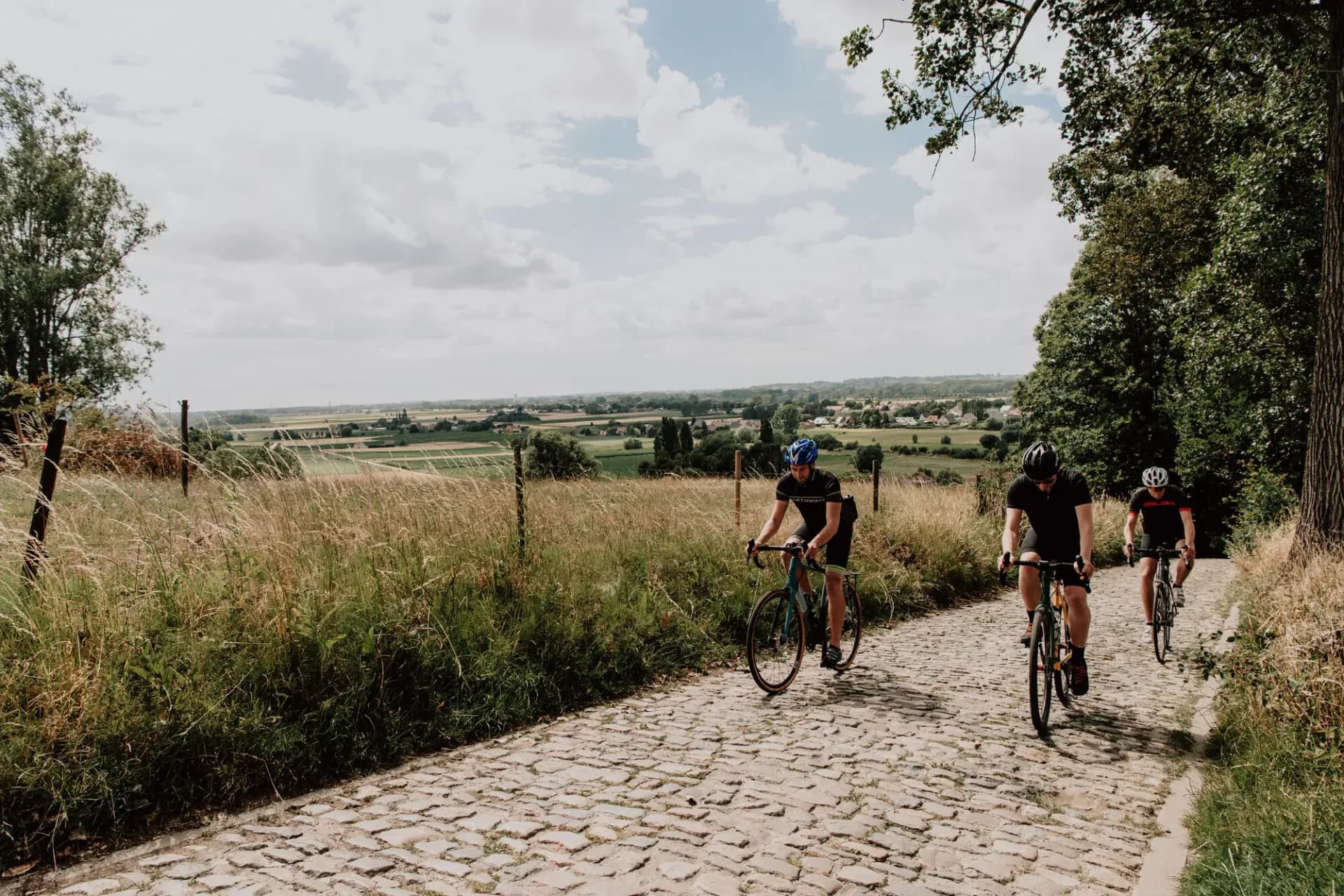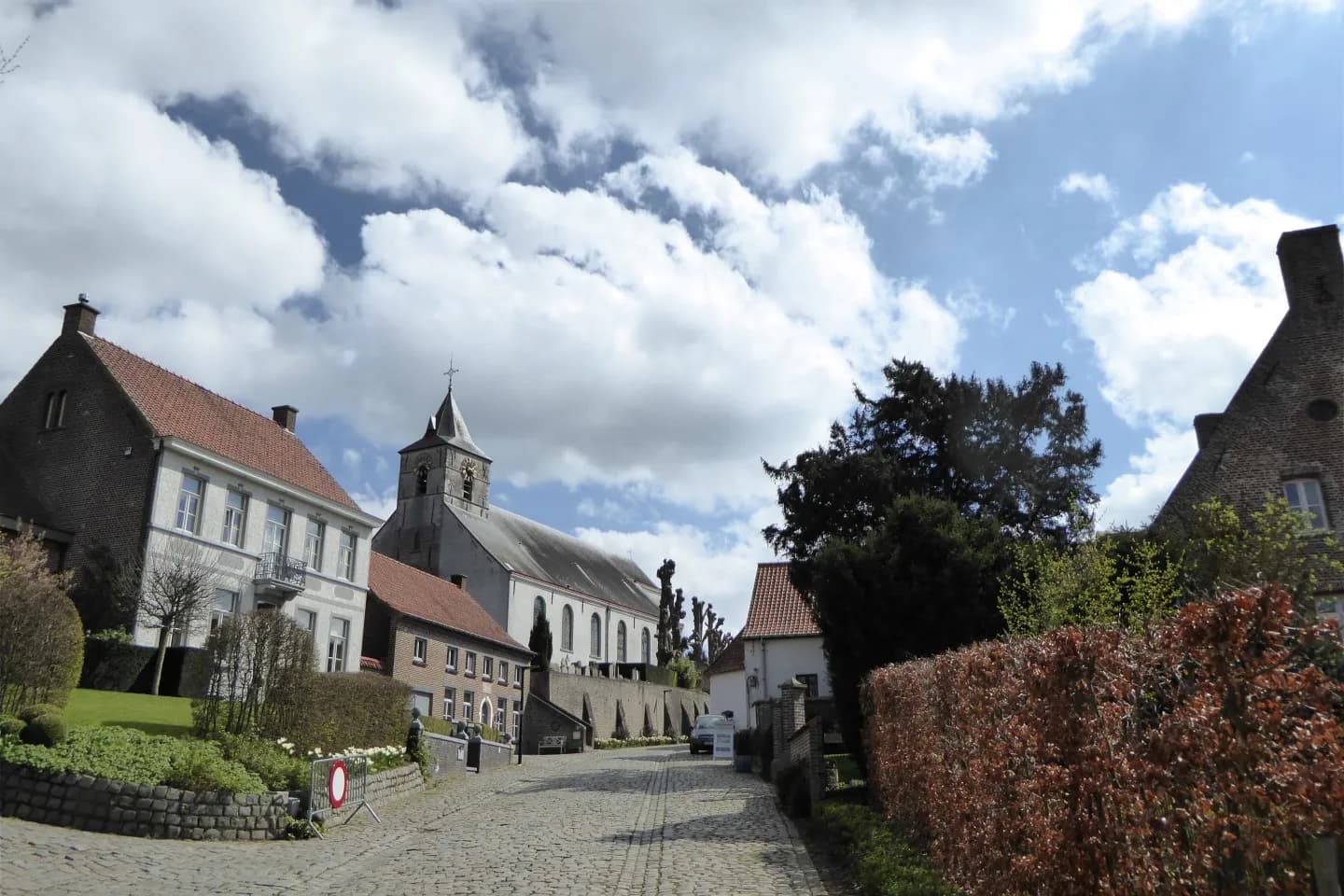
Kluisbergen, a small municipality in the Flemish Ardennes, holds the two climbs that have defined the Tour of Flanders since the race's 2012 route redesign moved its decisive action away from the Muur van Geraardsbergen.
The Oude Kwaremont is the longest cobbled climb in the race at 2.2 kilometres, deceptively gentle on paper — a 4% average gradient — but with a mid-climb pitch of 11.6% that punishes anyone caught out of position. It's ridden three times in the modern Ronde, with the final ascent, paired immediately with the short, brutally steep Paterberg (400 metres at up to 20%), usually deciding the race.
"The true Flandrien always emerges at the Oude Kwaremont," said Marc Sergeant, sports manager of Lotto-Soudal — a climb three-time Ronde winner Johan Museeuw has called the most unpredictable point in the modern race, and which Peter Sagan has named the hardest in all of Flanders.
At the summit of the Kwaremont, the Ronde van Vlaanderenstraat carries a monument to Karel Van Wijnendaele, the race's founder, alongside a roll of honour for its winners — a fitting landmark for the two climbs most responsible for deciding who joins that list each spring.